From Vendor to Colleague: How Qualis Builds Relationships That Compound
For Qualis, SONO has become more than a source of prospective relationships. It is a place to deepen strategic customer relationships, create peer-driven referrals, strengthen retention, and build a trusted position inside the hospice community.
The company reports exceptionally low churn among clients who participate, roughly six introductions a year through fellow Industry Partners, and customers who have moved from accounts to advocates.
-
 Hall Thorp
Chief Strategy Officer · Qualis
Hall Thorp
Chief Strategy Officer · Qualis
-
 Jay Myers
SVP & General Manager · Qualis
Jay Myers
SVP & General Manager · Qualis

Partnership impact at a glance
-
6 / Year
Partner-Generated Introductions
Qualis’s estimate of ad hoc introductions created through Industry Partner relationships, separate from Symposium attendance.
-
10–15
New-to-Qualis Hospices at a Typical Symposium
Qualis’s estimate of hospice organizations present that it may not already serve and where no prior relationship exists.
-
Low Single Digits
Reported Churn Among SONO-Attending Clients
Qualis reports exceptionally low churn among the customers who participate in SONO alongside its team.
-
Several Times Over
Qualis’s Assessment of Partnership ROI
Asked whether the relationship had paid for itself, Qualis’s Jay Myers answered, “several times over.”
Results reflect Qualis’s experience. Outcomes vary by organization, customer economics, participation, market position, and relationship development. These figures describe relationships and introductions, not guaranteed leads, contracts, or retention.
A Hospice DME Partner Built Around Accountability and Relationships
Qualis is a hospice-focused durable medical equipment management partner. Established in 2006, the company combines operational support, vendor coordination, contract and invoice management, and technology to help hospices manage DME more effectively.
Its DME+™ platform supports ordering, delivery tracking, contract management, invoice consolidation, and reporting across a network of equipment providers, alongside clinical education resources for hospice teams.
One structural distinction shapes everything about how the company operates: Qualis describes itself as a DME management organization rather than a direct DME supplier. Because it does not own, rent, or sell equipment, it can evaluate providers on service and price and hold them accountable on behalf of the hospice.
Qualis Company Facts
Context on the Industry Partner, as described by Qualis. These are company and product facts, not SONO partnership results.
- Year established
- 2006
- Company model
- Manager
- Technology platform
- DME+™
Founded to provide DME management and support to hospice organizations.
Qualis manages DME rather than owning, renting, or selling it. It is not a direct supplier.
Ordering, tracking, contracts, consolidated invoicing, and reporting in one place.
For Qualis, the question was never whether relationships mattered. The question was where the right relationships could actually develop.
Hospice Sales Was Relational. The Traditional Channels Were Still Transactional.
Before the SONO model existed, Qualis grew the way most hospice companies do. Its team attended state and national conferences, scheduled individual meetings, served customers well and hoped for referrals, and built trust one relationship at a time.
The company had already concluded that purchased lead lists were not useful for what it was selling. Hospice decisions require trust, and trust requires time.
That left conferences as one of the few reliable ways to create introductions. They were also inconsistent:
- Sometimes the right decision-makers attended. Sometimes they did not.
- Exhibit halls produced valuable interactions on some trips and very little on others.
- Conversations were short, and the vendor-and-prospect dynamic was built into the room.
- Travel and staffing costs were significant and largely fixed regardless of outcome.
- The return was difficult to evaluate with any precision.
The problem was not that relationships didn’t work. The problem was how difficult it was to create the right ones consistently.
What If You Built the Environment Around What Hospice Leaders Actually Wanted?
Qualis did not discover SONO. Hall Thorp, a Qualis founder and its Chief Strategy Officer, was among the industry leaders involved in shaping the early SONO Symposium.
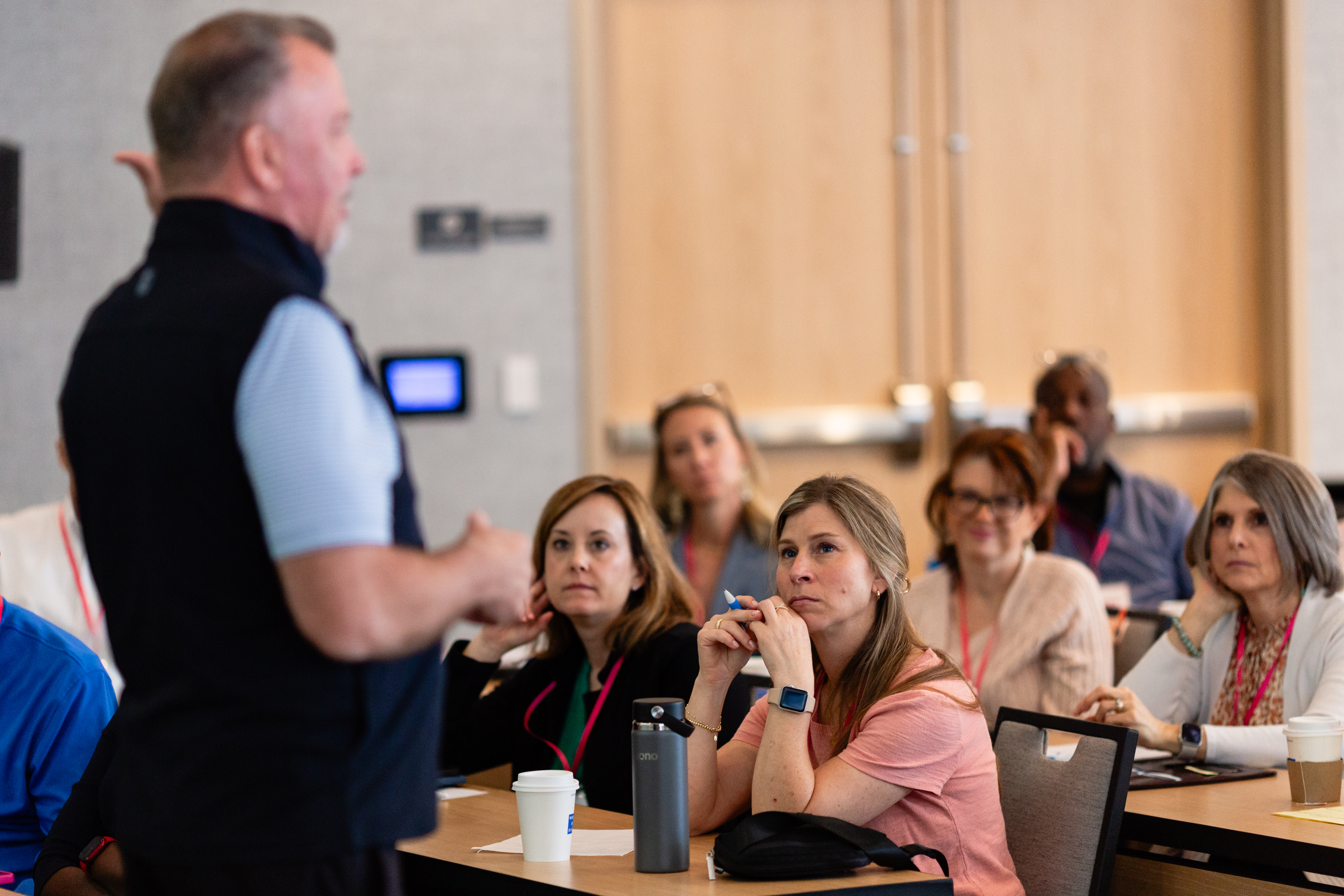
The thinking started with an observation. While Qualis was spending significant resources attending conferences, many of its own hospice clients had stopped attending them.
Rather than assume why, they asked.
What Leaders Said Was Missing
Not enough value for the time and cost of attending
Content that was not always relevant to senior leaders
An environment that could feel intimidating or cliquish
An exhibit-hall gauntlet they did not want to navigate
A return on the trip that felt vague
What They Described Instead
A safe, trusted environment for senior leaders
Candid discussion of real strategic challenges
Cross-pollination of ideas between organizations
Peers from outside their immediate markets
Relationships formed without a vendor gauntlet
What hospice leaders described was not another tradeshow. It was closer to a trusted think tank for senior leadership. That thinking helped shape the early SONO Symposium.
SONO was not designed around the exhibit hall. It was designed around the relationship.
Become a Colleague to the Industry, Not Just Another Vendor
“The dream outcome is that we as a vendor to an industry are considered colleagues within that industry.”
For Qualis, that meant earning a place where hospice leaders view the company as mission-aligned, credible, useful, trusted, and genuinely invested in their success.
The order of operations matters. Hall describes the first priority as serving existing customers well and giving them additional value. New business follows from that, rather than the other way around.
It is a subtle distinction with significant consequences, and it explains most of what happens on the rest of this page.
Three Days of Strategic Face Time Is Different From Another Account-Management Call
At a SONO Symposium, Qualis spends extended time with existing customers outside their day-to-day operating environment.
Those hospice leaders are not simultaneously putting out fires, moving between internal meetings, fitting a vendor into a lunch appointment, or working their way through an exhibit hall.
That changes what can be discussed. Instead of status updates, the conversation moves to what the customer is trying to build.

-
Strategic Initiatives
Where the organization is heading over the next several years.
-
Operational Priorities
What the team is actually being measured on this year.
-
Where They’re Struggling
Problems that rarely surface in a scheduled account review.
-
Where Qualis Can Help
Including help that has nothing to do with DME.
Hall describes existing-customer interaction as one of SONO’s primary sources of value for Qualis — which reframes what Industry Partnership actually is.
- Customer Success
- Executive Relationship Development
- Retention Infrastructure
- Strategic Account Engagement
The Best Person to Explain Qualis Isn’t Always Qualis
When customers develop deeper relationships with the Qualis team inside SONO, something changes. They stop behaving like passive accounts.
Jay describes customers continuing to talk about Qualis long after the event, sharing how the company has served them and helping create relationships with other hospice leaders. Hall describes existing customers walking prospects directly over to the Qualis team at other industry conferences.
In hospice, peer credibility carries weight that vendor marketing cannot replicate. “Here is what this company says about itself” is a fundamentally different sentence than “I use them, I trust them, and you should know them.”
“Our current clients are the ones that sell us.”
How a Client Becomes a Referral Source
-
Client
A hospice Qualis already serves.
-
Deeper Relationship
Extended time together outside the day-to-day.
-
Trust
Personal knowledge of the people behind the service.
-
Advocacy
The customer speaks up about Qualis unprompted.
-
Peer Introduction
A colleague at another hospice is brought into the conversation.
-
New Relationship
One that started with credibility already attached.
-
And in time, the loop begins again
When Customers Begin Investing in Your Success
“They go from being a client to an investor. They’re investing in us because they know we’re investing in them.”
The word “investor” is not financial. No customer is buying equity in Qualis. What Hall is describing is relational investment: customers who begin putting something of their own into the relationship because they can see the company putting something into theirs.
That reciprocity shows up in specific, unglamorous ways.
- They advocate for Qualis in rooms Qualis is not in.
- They make introductions rather than waiting to be asked.
- They give candid feedback instead of quietly tolerating a problem.
- They extend the benefit of the doubt when something goes wrong.
- They think in terms of a long-term partnership rather than a contract term.
Introductions Happen in More Than One Way
Qualis describes two separate relationship engines. They work differently, they run on different clocks, and they should be understood independently of one another.
10–15
Hospice organizations Qualis may not already serve
Hall’s estimate of the hospice organizations present at a typical Symposium where Qualis has no existing relationship on either side.
The value is not that Qualis receives a list. The value is that its people spend several days in the same trusted environment as those leaders, as participants rather than exhibitors.
6 / Year
Ad hoc introductions from other Industry Partners
Separate from the Symposium itself, Hall estimates roughly six introductions a year arrive through fellow Industry Partners.
The mechanism is simple. Another partner hears a customer describe a need, knows Qualis, trusts Qualis, and says so.
How a Partner Introduction Travels
-
Step One
A Need
A hospice leader describes a problem out loud, in a room where that is safe to do.
-
Step Two
A Trusted Partner
Another Industry Partner hears it and recognises who could actually help.
-
Step Three
Qualis
A company they know well enough to attach their own name to.
-
Step Four
Introduction
A conversation that begins with borrowed credibility instead of none.
This is not purchased access. It is transferred trust.
The Question Is Not “What Can I Sell You?”It’s “How Can I Help?”
Jay returns to that phrase repeatedly when describing the atmosphere at SONO. It sounds soft. In practice it is the operating system of the entire network.
Hospice leaders can describe problems openly. Industry Partners connect people who should know one another. Leaders from different regions exchange ideas without the competitive pressure they would feel with an organization down the road from them.
Jay gives examples of participants from completely different markets being connected around expansion plans, staffing, operational challenges, and hard-won expertise that someone else had already paid for in experience.

Here is the part that is easy to miss: most of those introductions produce no immediate revenue for the person making them.
That is precisely why the network works. People help because helping is the culture. The culture creates trust. And trust is what eventually creates value.
Low
Single
Digits
Reported churn among Qualis clients who attend SONO
Qualis says losing a client who participates in SONO is rare. Jay puts churn among that group in the low single digits.
Qualis is careful about what that does and does not prove. Customers who choose to attend are already engaged, and no single factor explains retention on its own. What the company can explain is why deeper relationships change the odds.
Repeated, unhurried, in-person interaction gives both sides more opportunity to communicate, surface issues early, align on expectations, and build the kind of personal trust that survives a bad week.
Hall makes the practical version of the point: when a customer knows the Qualis team personally, Qualis is far less likely to be surprised by a service issue. The conversation simply happens earlier, while it is still a conversation.
A Second Form of Return
Not simply winning the next customer, but protecting the relationships you have already earned.
Qualis-reported experience among customers participating in SONO. Results vary and should not be interpreted as a guaranteed retention outcome.
Concentrated Relationship Time That Would Otherwise Require Separate Trips
Without SONO, strategic account relationships still require investment. They simply require it one market, one calendar, and one dinner at a time.
The Traditional Account Visit
Travel to an individual market
Calendar coordination across busy executives
One customer per trip
One meal or one meeting
Limited time, then repeat across every account
One SONO Symposium
One destination
Multiple strategic accounts in the same place
Prospective relationships alongside existing ones
Fellow Industry Partners in the same room
Several days of shared experience, not a single hour
Jay describes the cost savings as significant. But the more interesting difference is not the expense line. It is that the quality of the interaction is not the same. A short account visit and three days in a shared environment are different activities that happen to share a category.
Has It Paid for Itself?
“Several times over.”
Qualis evaluates the investment across more than one line of the business.
-
New Business
Prospective relationships and trusted referrals.
-
Retention
The value of protecting customers the company already earned.
-
Customer Advocacy
Customers actively creating opportunities with their peers.
-
Travel Efficiency
Strategic account interaction concentrated into one destination.
-
Market Position
Being regarded as a trusted colleague inside hospice.
-
Relationship Quality
Knowing customers well enough to serve them better.
Qualis’s Business Economics
Hall notes that given the shape of Qualis’s business, one or two new clients can justify the overall investment. That arithmetic belongs to Qualis. Every organization should run its own.
A Network Only Works When the Partners Actually Behave Like Partners
Hall says SONO is difficult to describe to someone who has never experienced it, largely because most vendors have no comparable frame of reference to compare it to.
The Industry Partners are not companies occupying sponsorship slots. The intent is a group of complementary organizations willing to share, make introductions, contribute, help one another, protect the quality of the community, and care about the customer experience beyond their own sale.
Hall calls the relationships between partners symbiotic. That is the part competitors cannot buy, because it is not a feature of the program. It is a property of the people in it.
“The vendors we’ve selected as Industry Partners are truly partners with one another.”
Participation Is the Price of Admission
Qualis is direct about which kind of organization gets value here, and which does not.
Partners Who Succeed
Invest themselves, not just their budget
Participate in the community rather than observing it
Help recruit the right hospice leaders
Care about the other Industry Partners
Show up genuinely, and ask how they can help
The Approach That Fails
Arrive
Set up
Work a list
Pitch everyone
Leave
Hall is blunt about it: a company that approaches SONO the way it approaches a traditional conference will not get much out of it. Jay frames the requirement as participation and genuineness.
“They have to come off as genuine. This isn’t setting up a booth and pulling up a banner and standing behind a table.”
Industry Partnership is a partnership. It is not sponsorship inventory.
SONO Helped Qualis Become More of a Colleague Than a Vendor
“SONO has helped Qualis become more of a colleague instead of a vendor to great hospices in our industry.”
Jay adds the part that is hardest to put on a spreadsheet. The story does not stop with the people Qualis meets directly. Those people tell others. Those relationships create other relationships. He describes it as a ripple effect.
How the Ripple Travels
- One Relationship
- One Advocate
- One Introduction
- Another Relationship
- A Ripple Effect
The compounding value of a trusted network cannot be measured only by who is standing in the room on day one.
“They Can’t Afford Not To.”
— Jay Myers · SVP & General Manager, Qualis
That was Jay’s answer when asked what he would say to a culturally aligned vendor weighing Industry Partnership.
His point was not that every vendor should join. SONO is intentionally selective, and Hall describes being invited into the network as a compliment precisely because SONO has to say no to organizations that are not the right fit.
But for an organization that fits the culture, brings real value to hospice, has the economics to support it, wants long-term relationships, and is prepared to actually participate, Qualis sees the strategic case as difficult to ignore.
One Category. One SONO Industry Partner.
SONO intentionally limits Industry Partnership to protect the quality of the network, reduce direct category competition, and preserve a meaningful position for each organization inside the community.
If your company serves hospice, brings meaningful value to the industry, and believes long-term growth is built through trusted relationships, the next step is an alignment conversation.
Membership is subject to organizational fit, category availability, and acceptance by SONO.